Mar 25, 2026 · Print 4K
Custom vs Template Business Cards: Which Is Better?
When comparing custom vs template business cards, the answer depends on your goals, budget, and brand identity. For most professionals and businesses serious about making a lasting impression, custom business cards consistently outperform template options in perceived quality, brand alignment, and memorability.
That said, templates offer genuine advantages for startups, freelancers, and time-sensitive needs. Both paths have real merit, and the right choice hinges on a handful of practical factors covered in this guide.
What Are Custom and Template Business Cards?
Before weighing your options, it helps to understand what each approach actually involves.
- Template business cards are pre-designed layouts offered by printing platforms and design tools. You select a design, plug in your name, title, contact details, and logo, and send it to print. The structure, color palette, and typography are largely fixed. The process is fast, straightforward, and usually less expensive.
- Custom business cards are built from scratch, either by a professional designer or through advanced design tools with full creative control. Every element, from the typeface and color to the finish, shape, and material, is deliberate. You own the visual identity entirely.
The distinction matters more than it might initially seem. A business card is often the first physical touchpoint between you and a potential client, partner, or employer. That small rectangle of material carries a disproportionate amount of brand weight.
Custom vs Template Business Cards: Which Option Delivers More Value?
This is the central question most professionals wrestle with, and the honest answer is nuanced.
Template cards deliver value in speed and cost. A template can be ready for print in under an hour. For someone launching a pop-up shop, attending a last-minute networking event, or testing a new business concept, that speed is genuinely useful. Most template platforms are optimized for ease and accessibility, meaning you do not need design experience to produce something presentable.
Custom cards deliver value in differentiation and brand authority. In a world where most professionals use the same three or four popular templates from common platforms, a genuinely distinct card stands out immediately. Research in marketing psychology consistently shows that physical materials with unique tactile or visual qualities are retained longer and recalled more clearly than generic equivalents.
Consider this: studies on business card effectiveness suggest that roughly 88% of business cards handed out are thrown away within a week (source). Cards with distinctive design elements, premium materials, or unusual formats survive that culling process at a significantly higher rate. That survival rate matters because every card in someone’s wallet or on their desk is a passive marketing asset.
The cost gap between templates and custom cards has also narrowed considerably. With modern business card printing services offering short-run digital printing, custom cards no longer require large minimum orders or prohibitive setup costs.
Key Factors That Should Drive Your Decision
Brand Stage and Maturity
If your brand identity is still evolving, investing heavily in custom cards may not be the best use of resources. Templates allow you to iterate quickly. Once your visual identity, including your logo, colors, and typography, is locked in, the case for custom printing becomes much stronger.
Industry and Audience
In creative industries, finance, law, real estate, and executive consulting, the expectation of polish is higher. A templated card in these contexts can inadvertently signal a lack of investment in your own brand, which raises questions about how you will invest in a client’s needs. In contrast, a skilled tradesperson or small retail operator may find that a clean, template-based card serves perfectly well.
Material and Finish Options
This is where the custom vs template debate often gets decided in practice. Template platforms are almost universally limited to standard card stock. Custom printing opens the door to materials and finishes that fundamentally change how a card is perceived.
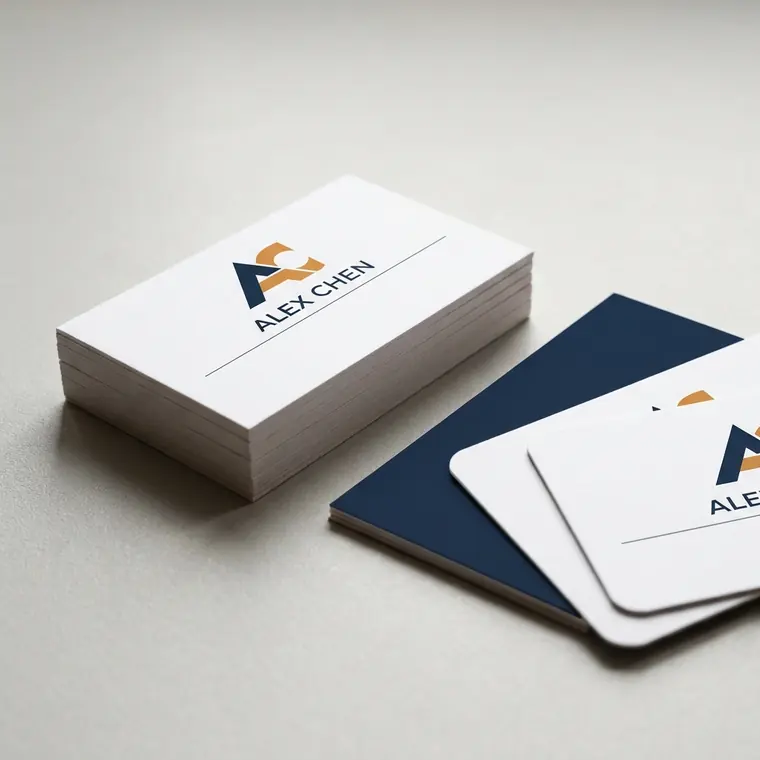
Textured linen stock, soft-touch matte lamination, spot UV coating, foil stamping, and rounded corners all signal quality before anyone reads a single word. These choices are not available through most template systems.
The Role of Technology in Modern Cards
Contemporary card design increasingly incorporates digital functionality. QR logo printing has become a practical bridge between physical and digital networking. A custom-printed card with a branded QR code that links to your portfolio, LinkedIn profile, or booking page transforms a static card into an interactive tool. This kind of integration is difficult to execute well through a template system, where QR codes often feel like an afterthought rather than a design element.
Comparison Table: Custom vs Template Business Cards
| Factor | Template Cards | Custom Cards |
| Design flexibility | Low to moderate | Full creative control |
| Turnaround time | Fast (hours to 1 day) | Moderate (2 to 7 days) |
| Cost per unit | Lower | Moderate to higher |
| Material options | Standard only | Extensive |
| Brand differentiation | Low | High |
| Minimum order quantity | Often 100 or fewer | Varies by printer |
| Best for | Startups, quick needs | Established brands, events |
| Technology integration | Limited | Strong (QR, NFC, etc.) |
Challenges and Honest Considerations
No approach is without trade-offs, and it is worth being direct about the limitations on both sides.
- Template limitations go beyond aesthetics. When many people in your industry use the same platforms, visual overlap becomes a real problem. There is a nonzero chance that a potential client has seen your exact template layout on someone else’s card. More subtly, template systems can limit you to design conventions that are already slightly dated by the time you use them, since popular templates reflect what was trending one to two years prior.
- Custom card challenges center on time, cost, and the need for design competence. A poorly executed custom card is worse than a clean template, because it signals effort without delivering quality. If you do not have design skills or access to a skilled designer, a good template will outperform a bad custom concept every time. Budget matters too. While costs have come down, genuinely premium custom cards with specialty materials and finishes can cost three to five times more per unit than basic template cards.
There is also a logistical dimension. Specialty materials like acrylic or metal require printers with specific capabilities. Not every local print shop or online platform can handle these orders, which means some research is necessary before committing.
Practical Advice for Making the Right Choice
If you are early-stage or budget-constrained:
Choose a clean, minimal template and invest in the best paper stock that platform offers. Simplicity executed well beats complexity executed poorly.
If you are at an established business with a defined brand:
Invest in custom design. Work with a designer who understands print specifications and can optimize your card for the material and finish you choose.
If you want maximum impact at industry events or trade shows:
Explore specialty materials. Online acrylic printing has grown significantly in popularity for premium networking contexts. Acrylic cards are distinctive, durable, and almost impossible to throw away without a second thought, which is precisely the point.
If you operate in or near a major market:
Leverage local expertise where it matters. Working with a printing company in New York, like Print 4K or another major design hub can give you access to premium services, faster turnaround, and design consultation that generic online platforms cannot replicate. Local printers also allow you to approve physical proofs before committing to a full run.
For technology-forward professionals:
Build QR code integration into your card design from the start, not as an add-on. A QR code that opens a curated landing page, digital portfolio, or scheduling tool adds measurable utility to your card and makes follow-up easier for both parties.
FAQ: Custom vs Template Business Cards
Is it worth paying more for custom business cards?
For most established professionals and businesses, yes. Custom cards deliver stronger brand differentiation and are more likely to be retained by recipients. The cost difference per card is often small in absolute terms, especially for short print runs. The return on investment comes from the impressions the card makes over its lifespan, which for a well-designed, high-quality card can be substantial.
Can template business cards look professional?
Absolutely, with the right approach. A clean, minimal template on quality card stock looks considerably more professional than a cluttered custom design on thin paper. Template quality has improved significantly in recent years. The key is choosing a simple design, avoiding visual overload, and selecting the best material option available on the platform.
What card materials are most impressive for networking?
Beyond standard paper stock, materials like thick duplex card, soft-touch laminated stock, and acrylic consistently generate positive reactions in professional networking settings. The right choice depends on your industry and brand tone. Acrylic and metal cards work well in tech, finance, and luxury markets. Textured paper stocks suit creative and consulting fields.
How many business cards should I print for an event?
A practical rule is to estimate the number of meaningful conversations you expect to have and multiply by 1.5 to account for follow-up handoffs and card sharing. For a full-day industry conference, 50 to 100 cards is a reasonable baseline for most professionals. If you are a primary exhibitor or speaker, plan for considerably more.
Should I include a QR code on my business card?
In most professional contexts today, yes. A QR code that links to something genuinely useful, such as your portfolio, digital contact card, or a specific landing page, adds tangible value. Design it as part of the card’s visual layout rather than squeezing it in as an afterthought. Make sure the destination page is mobile-optimized, since recipients will almost always scan on a phone.
Conclusion
The custom vs template business cards debate does not have a single universal answer, but it does have a clear framework. Templates are the right tool for speed, budget constraints, and early-stage brand building. Custom cards are the right investment when your brand identity is defined, your audience expects polish, or you want your card to actively work for you after the handshake ends.
The most important principle is intentionality. A thoughtful template beats a careless custom card. A distinctive material or finish can elevate even a simple design. And in every case, the goal is the same: to hand someone something they will keep, remember, and act on. Design, material, and execution are the variables that determine whether that happens.